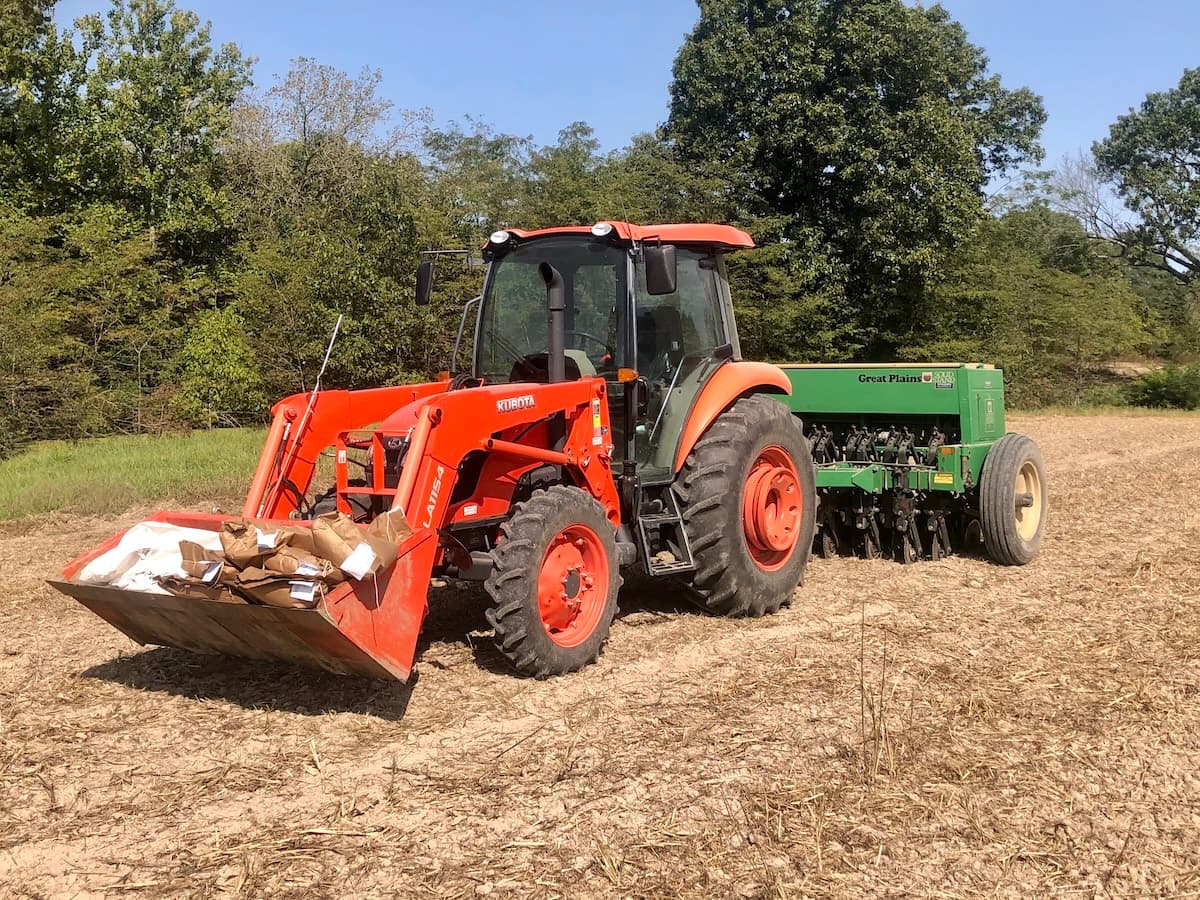
Food plots are designated areas cultivated to grow specific types of vegetation that provide food and nutritional support to wildlife, particularly game species such as deer, turkey, and waterfowl. These plots play a critical role in wildlife management and conservation, enhancing the habitat to attract and sustain a healthy wildlife population. They can also be integral for landowners interested in hunting, wildlife observation, or photography. We also provide CRP seeding services — including cool season grasses, waterways, native grasses, and pollinator programs. Food plots can be incorporated into CRP plantings or established as standalone projects depending on your goals.
How Does It Work?
Site Selection and Assessment
The process begins with selecting the appropriate site for the food plot based on soil quality, sunlight exposure, proximity to natural wildlife corridors, and existing vegetation. The land is assessed to determine what enhancements are needed to optimize conditions for the selected crops and the target wildlife species.
Planning and Design
The forestry consultant works with the landowner to design a food plot that aligns with their goals, such as attracting specific game species or enhancing overall biodiversity. This includes deciding the size of the plot, types of plants to be sown (annuals or perennials), and the layout that best suits the land and wildlife patterns.
Soil Preparation and Planting
Soil preparation is crucial and may involve liming, fertilizing, and tilling to create the optimal growing conditions. Planting is timed based on the species' specific needs and local climate conditions to maximize growth and utility for wildlife.
Maintenance
Once the plot is established, ongoing maintenance is necessary to ensure it remains effective. This includes managing weeds, re-seeding or planting as necessary, and possibly additional fertilizing to keep the plants healthy and attractive to wildlife.
Monitoring and Adjustment
Regular monitoring helps evaluate the success of the food plots in attracting and supporting wildlife. The consultant checks for signs of wildlife usage and plant health, making adjustments to the strategy as necessary to improve efficacy.
CRP Seeding Programs
In addition to wildlife food plots, we offer CRP seeding services tailored to Conservation Reserve Program requirements. Our CRP seeding includes cool season grasses, waterway establishment, native grass plantings, and pollinator habitat programs. Whether you need food plots incorporated into a CRP planting or a standalone food plot project, we can design and install the right solution for your property and goals.
Benefits
Wildlife Attraction and Nutrition: Food plots provide essential nutrients to wildlife, which might not be available in sufficient quantities in their natural habitats. This is particularly important in areas with high wildlife populations or limited natural food sources.
Hunting and Wildlife Observation: For properties used for hunting or wildlife observation, food plots can significantly enhance the quantity and quality of wildlife interactions.
Conservation and Habitat Management: Strategically placed and well-managed food plots contribute to wildlife conservation efforts by supporting robust and diverse animal populations.
Land and Environmental Stewardship: Implementing food plots is a proactive approach to land management that demonstrates a commitment to sustainable practices and wildlife conservation.
Interested in food plots & crp seeding?
Get in touch today to discuss your forestry and land management needs.
Get in TouchOther Services
Forest Stewardship Plans
Comprehensive management strategies designed to guide landowners in achieving their objectives while ensuring ecological sustainability.
View detailsTree Planting
Professional tree planting services for reforestation, habitat restoration, and timber production.
View detailsWildlife Enhancement
Strategic interventions to improve habitat conditions for specific wildlife species and increase biodiversity.
View details